
SINGAPORE, Jan. 9, 2026 -- Produced by iQIYI, the historical epic series "The Unseen Qin Empire" was officially announced on January 9. The series brings together director Lü Xing, known for "Burning Ice", and screenwriter Chang Jiang of "The Advisors Alliance", and stars Chen Xiao, Zhang Xincheng, Dai Luwa, Dai Xu and Xu Hao, with special appearances by Wang Jinsong and Chen Shu. With film-level production values, the drama uncovers the thrilling, lesser-known stories behind the unification of the six states under China's first emperor Qin Shi Huang (personal name Ying Zheng). This is not treated as a sealed-off chapter of the past, but as an intense, character-driven retelling engraved in history, and a focused exploration of Eastern classical aesthetics.
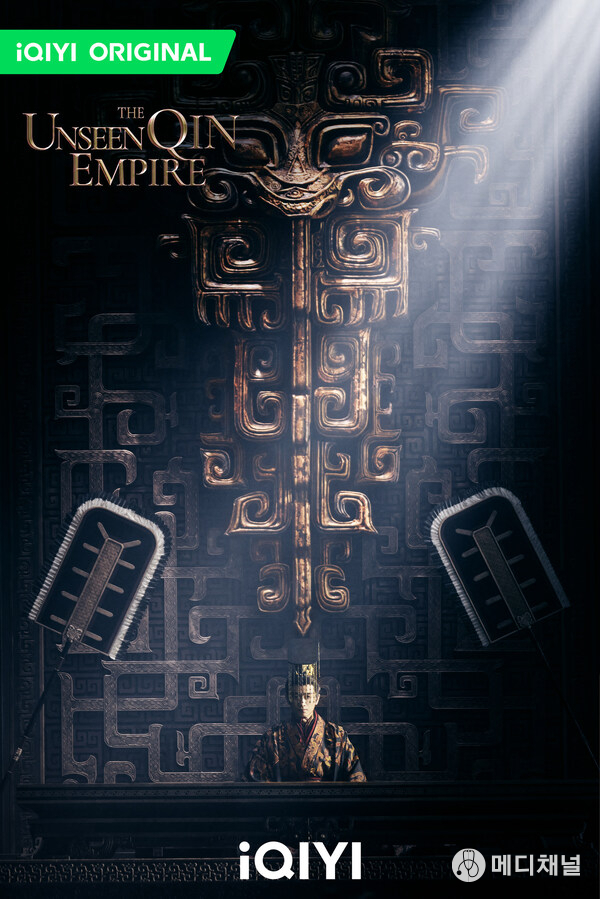
The poster presents a newly designed, meticulously researched image of a Qin Dynasty grand hall, highlighting a creative distillation and reimagining of "Qin-era aesthetics" in all their grandeur, order and sharp intensity. Abandoning the lavish, colorful look typical of traditional historical dramas, it adopts a minimalist black-and-gold palette and rigorous architectural composition, aiming to make every architectural line, contrast of light and shadow and ornamental pattern a vehicle for conveying the spirit of that era. It seeks to deliver to global audiences a visual language of "order, power and systems", translating Eastern historical perspectives into a visual narrative that can be broadly understood, and reflecting a confident, outward-looking cultural dialogue.
"The Unseen Qin Empire" is expected to premiere in late 2026. The release of this international poster is not only the drama's first public appearance, but also a clear statement that Chinese historical dramas are moving with confidence toward the center of the global stage with a new aesthetic language, deeper thematic ambition and industrial-level production standards, inviting audiences worldwide to explore enduring Qin-era questions of order and civilization.